In San Juan, the same block can hide a spot where locals eat and one built entirely for cruise-ship traffic. Interestingly, they don't always look different from the street.
This happens because recommendations can lead you straight into tourist traps. You'll get pointed to famous names like Raíces and Café Manolín, surrounded by other tourists paying more for food that's just okay. Meanwhile, locals are one door over at Cayo Caribe or around the corner at Deaverdura, eating better for less.
It's pretty easy to fall into that trap and leave San Juan without tasting the food that's actually worth talking about. We didn't want that to happen to you. So take worry off your plate. We read traveler itineraries on Roovio and other travel platforms, checked Google reviews for the restaurants, and narrowed it all down to 7 of the best foods in San Juan you should try on your trip.
List of Best Foods in San Juan
We didn't just pick these foods because they sound good. We went through recommendations on Instagram Reels, traveler comments, and restaurant reviews to narrow down the dishes people keep talking about. Then we checked the restaurants serving them to make sure you know where to go when the craving hits.
Below are 7 of the best foods in San Juan, from filling local dishes to something sweet after your meal. We've also added the restaurants to try and the prices, so you can plan your food stops without guessing.
1. Mofongo (best as Mofongo Relleno con Churrasco)
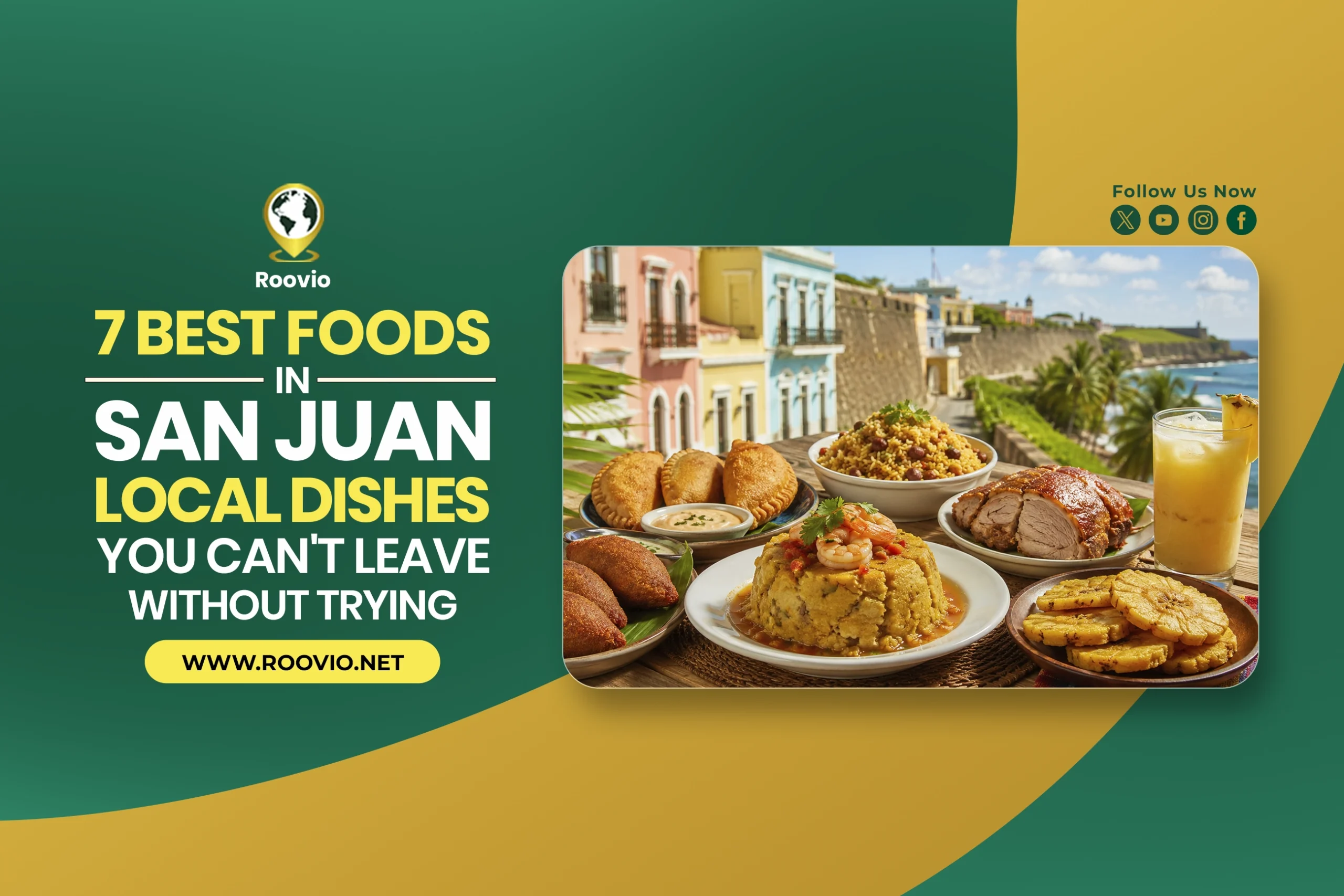
You can't claim you've tasted Puerto Rico until you've had a proper Mofongo Relleno con Churrasco. It is the traditional Puerto Rican food. Mofongo is made from green plantains, fried and mashed inside a pilón (wooden mortar) with garlic, salt, and chicharrón (pork cracklings). The mixture is packed into a dense dome and stuffed or topped with churrasco (skirt steak) and a garlic-citrus mojo.
The first thing you notice when the plate arrives is the garlic smell. A good mofongo should be soft enough to break with a fork but never gummy. The churrasco should be tender, while the chicharrón folded into the plantain gives it a little crunch in every bite.
A local's simple test says it best: if you have to cut mofongo with a knife, something went wrong. If mofongo is the dish you came for, our full guide to the best Mofongo in San Juan breaks down exactly where to find it done right.
To make it even better, use the warm caldo served on the side. Pour it into the mofongo while eating so it stays moist and flavorful. You can also ask for extra caldo, add house ajillo (garlic) sauce, and finish with a squeeze of lime to balance the richness. It's the one dish nearly every San Juan food tour builds a stop around, and easily one of the best foods in Old San Juan for a first-timer.
- Restaurants to Eat Mofongo: Raíces (Old San Juan), Barrachina, Cayo Caribe, Kikita Beach House (Dorado), 1919 at Condado Vanderbilt
- Average Price: Around $18–$28 per serving
- Best Time to Eat Mofongo: Best enjoyed as a proper meal when you have a good appetite. It is rich, filling, and comforting rather than a light snack.
- Quick Tips: Ask for extra caldo to keep the mofongo from drying out. Add ajillo sauce and a little lime for a stronger flavor.
2. Lechón (Spit-Roasted Pork)
If mofongo is Puerto Rico's centerpiece dish, lechón is its beating heart. This is not just a meal; it is a full mountain culture experience where families gather, music plays, and the smell of roasting pork fills the air. In Puerto Rico, lechón is such a big part of celebrations that many locals say it is even more loved during holidays than turkey.
A proper lechón starts with a whole pig marinated with garlic, oregano, and sour orange. Then it is slow-roasted over coals for hours until the meat becomes tender and the skin, known as cuero, turns crispy and crackling.
Eating lechón is already an experience, but watching it being served is even more fascinating. At a real lechonera, portions are cut straight from the roasted pig, and you definitely want a piece of that crispy skin on top.
Local Pro-Tip
- Always ask the pitmaster for a piece of the cuero on top. It's a shattering, salty skin that, as one local put it flatly, "tastes a lot better than it looks."
That first bite tells you why people keep coming back. The crunchy cuero, juicy pork, and smoky flavor come together in a way that feels like Puerto Rico on a plate. It's a bucket-list bite on any Puerto Rico food tour and a big reason lechón lands near the top of the best foods in San Juan conversation, even when the best pits sit just outside the city.
- Restaurants to Eat Lechón: Lechonera Los Pinos (Guavate / La Ruta del Lechón) and El Rancho de Apa (Guaynabo)
- Average Price: Around $10–$16 per person
- Best Time to Eat Lechón: Go on a weekend afternoon for the full lechonera experience.
- Quick Tips: Order it with arroz con gandules and guineítos en escabeche for the classic combination. Add some local pique (vinegar hot sauce) to balance the richness.
3. Arroz con Gandules
Every food has its own tale, but arroz con gandules is part of every tale. It is an everyday food that locals don't just order at restaurants. It is commonly made at home too, which is why this simple-looking rice feels so connected to Puerto Rican life. Ask anyone to name the Puerto Rican popular food that shows up at every gathering, and this is it.
It is rice cooked in sofrito made with cilantro or culantro, garlic, ají dulce, onion, and tomato, along with gandules (pigeon peas) and often pork. Achiote gives it that familiar golden-orange color.
Local Insights
- Look for the pegao, that faint, crispy bottom crust left in the pot. It's the prized crunchy bit that locals will literally fight over at the table.
A good arroz con gandules has separate, flavor-packed grains, never mushy rice. And then there is the pegao, the slightly crispy layer at the bottom that locals fight over. If you get some, don't leave it behind.
If you want to make your plate even better then pair it with a slice of avocado and some habichuelas guisadas (stewed beans). At most restaurants, you'll get it scooped beside or underneath the main dish. No list of Puerto Rican foods is complete without it, and it's one of the most comforting of the best foods in San Juan to build a plate around.
- Restaurants to Eat Arroz con Gandules: El Rancho de Apa (Guaynabo), La Casita Blanca (Santurce), and lechoneras in Guavate
- Average Price: Around $3–$6 as a side; often included with a platter
- Serving Style: Scooped beside or underneath the main dish
- Quick Tip: Dig for the pegao and pair it with avocado and habichuelas guisadas.
4. Alcapurrias
If you are heading to Piñones, don't just walk past the little kioskos by the beach. Stop for an alcapurria. This is the kind of Puerto Rican street food you eat with your hands, standing near the beach, with a little hot sauce and no fancy plate needed.
The outside is made from grated green banana and yautía, or taro, seasoned and wrapped around a filling of spiced ground beef or blue crab. Then it goes straight into the fryer until the outside turns light and crisp while the filling stays soft and flavorful inside.
Street Rule
- Quality can vary from stall to stall; always pick the busiest kiosk with a line. Fast turnover means fresh oil and a hotter, lighter fritter.
A good one should have that delicate crunch on the outside. One traveler called the shell "light as a snowflake," while the inside should feel almost like a light fried mashed potato. If you go for the crab version, you are getting the one many people prize most.
The best part is eating it fresh from the kiosk. A busy stall usually means the food is moving quickly, so your alcapurria is more likely to come out hot and freshly fried. Add the local pique or hot sauce before your first bite. Locals swear it takes the whole thing to another level. It's a highlight of any San Juan food tours itinerary and one of the best foods in San Juan to grab when you want something quick and honest.
- Restaurants and Kioskos to Eat Alcapurrias: Kiosko El Boricua, Loíza, La Alcapurria Quemá, Santurce, Piñones, Loíza
- Average Price: Around $2 to $4 each.
- Best Way to Eat Alcapurrias: Grab one fresh from the fryer, add some pique, and eat it by the beach.
- Quick Tips: Pick a busy kiosk because faster turnover usually means fresher food. Try the crab version if it is available. Keep some cash or ATH Móvil ready.
5. Bacalaítos
If you see someone at a beachfront kiosk holding a giant, golden-brown fritter that's practically big enough to block out the sun, you're looking at a bacalaíto. It is easily one of the most famous and addictive street foods across the entire island, and a must-eat on any food tour Puerto Rico travelers rave about.
Bacalaítos are made with salt cod, or bacalao, mixed into a thin flour and water batter with sofrito herbs. The batter is dropped into hot oil and fried until it spreads into a wide, flat fritter with crispy edges.
The edges come out shatteringly crisp, while the middle stays a little chewy with white flakes of cod running through it. Think of something between a fish cracker and a thin fish pancake. And like most good fried food, it is at its best hot out of the oil.
You can make the bacalaítos even better if you add some hot sauce and grab a coco frío, or cold coconut, from the roadside. Between this and the alcapurrias, Piñones easily holds some of the best food in Old San Juan's wider orbit.
- Restaurants and Kioskos to Eat Bacalaítos: Piñones beachfront kioskos.
- Average Price: Around $2 to $5 each, depending on the size.
- Best Way to Eat Bacalaítos: Get one fresh from the fryer, add hot sauce, and pair it with a cold coconut while sitting around the Piñones beachfront.
- Quick Tips: Eat it hot. That is when the edges have their best crunch. Pick a busy kiosk for faster turnover and fresher food. Try it with a coco frío for the full street food combination.
6. Pinchos
All the best foods of San Juan we listed above require your time. You need to be in a restaurant to sit and wait to eat. That's not the case with pinchos. You grab a skewer, walk along the beach, and start eating it straight from the stick. That is part of what makes pinchos such a fun food to have in Puerto Rico.
You will usually get big chunks of chicken or pork grilled over an open flame until they pick up that dark, smoky char. The meat is brushed with a sweet and smoky BBQ sauce, and a piece of toasted bread usually sits at the end of the stick. It is simple, messy, and exactly the kind of food that works when you are out exploring or hopping between places to eat in Puerto Rico.
The meat should be tender enough to almost fall off the skewer. One description put it perfectly: "any more and it won't stay on the stick." That is the texture you want. Add some of the hot pique they hand you and the sweet sauce suddenly has a nice little kick.
Pinchos also works when you are not looking for a full meal. One skewer makes an easy snack while walking around, and two can turn into a proper little meal without slowing down your day. It's the ultimate grab-and-go among the best foods in the San Juan crowd, and a staple of casual food in Puerto Rico San Juan eating.
- Restaurants and Places to Eat Pinchos: Piñones, Luquillo Kioskos, El Churry
- Average Price: Around $3 to $5 per skewer.
- Best Way to Eat Pinchos: Get it straight from the grill, ask for extra sauce and pique, then eat it while walking the beach. The bread at the end of the stick is part of the experience too.
- Quick Tips: Choose a busy stand where the skewers are being cooked to order. Ask for extra BBQ sauce if you like a sweeter, smokier bite. Add pique for some heat. If you want something lighter than the fried street foods, pinchos are a good pick because they are grilled rather than deep-fried.
💡 Foodie Pro Tip:
- The popular dishes in this guide are just the start. Around San Juan, you’ll also find small street carts and local spots serving delicious chicharrón, mofongo, alcapurrias, mallorcas, and plenty more.
- Want to know exactly where locals are eating? Roovio lets you browse, save, and share real Puerto Rico itineraries from people who have already been there. You can check their restaurant stops, food recommendations, and notes on what was actually worth ordering.
7. Mallorca (the Sweet Breakfast Sandwich)
If you are in Old San Juan in the morning, this is one breakfast you should put on your list. Mallorca is a soft, sweet bread that locals have loved for years, and it is especially good when it comes hot from the griddle, covered with powdered sugar and served with a strong café con leche.
It is made from a soft, sweet, coiled egg bread. The bread is buttered and pressed on the griddle until warm, then finished with powdered sugar. You can have it plain, or fill it with ham, cheese, egg, or bacon if you want something more filling.
The best way to start is with the plain buttered Mallorca. You get the warm bread, the buttery middle, and that little sweetness from the sugar without anything covering the flavor. Once you have tried that, go for the ham and cheese if you want a heavier breakfast.
One traveler described it as "a cross between a donut and a pancake and a light roll."
That is pretty close to what you get. Cafetería Mallorca is the classic place to try it on San Francisco Street, and the café itself is part of the experience. You sit down, it comes pressed hot on a plate, and you eat it with your coffee rather than rushing off with it. It's a sweet way to close out your food Old San Juan morning, and a soft, sugary contender for the best foods in Old San Juan before lunch even starts.
- Restaurants to Eat Mallorca: Cafetería Mallorca on San Francisco Street, Kasalta in Ocean Park, and Spiga in Old San Juan
- Average Price: Around $3.95 for plain or buttered, $5.25 for ham and cheese, and $7 or more for bacon, egg, and cheese
- Best Time to Eat Mallorca: Breakfast, especially in the morning when you can sit down with a fresh Mallorca and café con leche
- Quick Tips: Try the plain buttered one first. Then go for ham and cheese if you want something more filling. Don't skip the powdered sugar.
Local Tips for Eating in San Juan
- Lunch or dinner: Lunch is where the value is: several traditional spots run cheaper lunch menus (one couple was told to specifically ask for the lunch menu and paid meals in the $10 range). Save the tasting-menu rooms for dinner.
- Reservations: For the higher-end and buzziest kitchens, book ahead; the small, popular rooms fill up, and some don't take walk-ins. For classics like El Jibarito, there's no reservation, so get there early (around 5 pm) to beat the wait.
- Street vendors: Don't be shy about the kioskos, roadside grills, and pinchos carts; locals insist the best, most honest eating is off the food trucks and beach stalls, not the polished dining rooms. Pick the busiest stall for fresh oil and fast turnover.
- Portion sizes: Portions run generous. Mofongo and pastelón are heavy, happily shareable, and dishes like paella at Barrachina are built for two. Come hungry; pace yourself across the day.
- Cash vs cards: Sit-down restaurants take cards, but the kioskos in Piñones, Luquillo and Guavate are often cash or ATH Móvil only. Carry small bills.
Plan the rest of your trip: Great food is only half the itinerary. Line up your eating around the free things to do in San Juan, pick smart lodging with our guide on where to stay in San Juan, and pack right before you fly with this Puerto Rico packing list. Do that, and your hunt for the best foods in San Juan slots neatly into everything else.
FAQ
What food is Old San Juan famous for?
Traditional comida criolla, mofongo, lechón (roast pork), arroz con gandules. Plus a deep bench of fried Puerto Rican street food (alcapurrias, bacalaítos, pinchos), bakery treats like mallorcas and quesitos, and the piña colada, which the old city claims as its birthplace. In short, the best foods in Old San Juan run from sit-down criollo plates to beachside fritters.
What's the most traditional Puerto Rican dish?
If you eat one thing, make it mofongo. It's the single most-recommended dish across every local conversation. For the everyday soul of the table, it's arroz con gandules; for celebration food, it's lechón. Those three anchor most top 10 Puerto Rican dishes rankings you'll find.
Where do locals eat in San Juan?
Away from the most tourist-heavy rooms. Locals point to spots like Deaverdura (casual, great value), Cayo Caribe (seafood, better and cheaper than the tourist mofongo spots), Café El Punto and Cafetería Mallorca. Above all, the fondas, panaderías and beach kioskos over the polished dining rooms, the honest side of food in Old San Juan.
What street food should I try?
Head to Piñones (minutes from the old city) for alcapurrias, bacalaítos and pinchos grilled by the beach, plus a coco frío to wash it down. It's the most authentic, best-value eating around San Juan and the highlight of most self-guided Old San Juan food tour routes.
Is Old San Juan expensive for food?
It ranges widely. You can eat brilliantly for a few dollars at kioskos and bakeries (mallorca ~$3.95, alcapurrias ~$2–$4, pinchos ~$3–$5), or spend big at fine-dining rooms. Tourist zones cost more than the interior of the island.
Conclusion: Build Your Own Old San Juan Food Crawl
The best way to eat Old San Juan is to graze your way through a full day. Start with breakfast — a buttered Mallorca and café con leche at Cafetería Mallorca. Snack mid-morning on a quesito from a panadería. Roll into lunch with mofongo relleno con churrasco (ask for the lunch menu).
Take the short hop to Piñones for afternoon street food: alcapurrias, bacalaítos and pinchos by the sand. Come back for dinner — lechón and arroz con gandules, or pastelón if you want comfort — and finish with tembleque or flan and a real-coconut piña colada where they claim to have invented it.
Five stops, one unforgettable route, and every bite a reason to come back. Follow it, and you'll tick off the best foods in Old San Juan in a single day — proof that the best foods in Old San Juan aren't hiding in the tourist traps at all, just one door over.