Long before Puerto Rico became a favorite among sun seekers, soldiers watched its shores, empires fought over it, and generations of locals shaped it. The Spanish broke ground in 1539 and kept building until 1787. San Juan Bay was the front door to their entire Caribbean empire, and they weren't about to leave it unlocked.
That is what makes Puerto Rico's landmarks so much more interesting than a quick photo stop. They aren't just old buildings or pretty places to wander. They are pieces of the island's story, and some of them are still remarkably good at telling it.
Of course, you don't have unlimited time to chase every historic site on the island. So we picked seven Puerto Rico landmarks that are worth rearranging your itinerary for, whether you came looking for history, great views, or simply a place that makes you stop and think, “What happened here?”
7 Puerto Rico Landmarks Worth Putting on Your Itinerary
Puerto Rico has no shortage of historic sites, but some are far more memorable than others. These seven give you the best mix of history, architecture, dramatic locations, and the stories that make the island worth wandering beyond the beach.
1. Castillo San Felipe del Morro (El Morro), Old San Juan
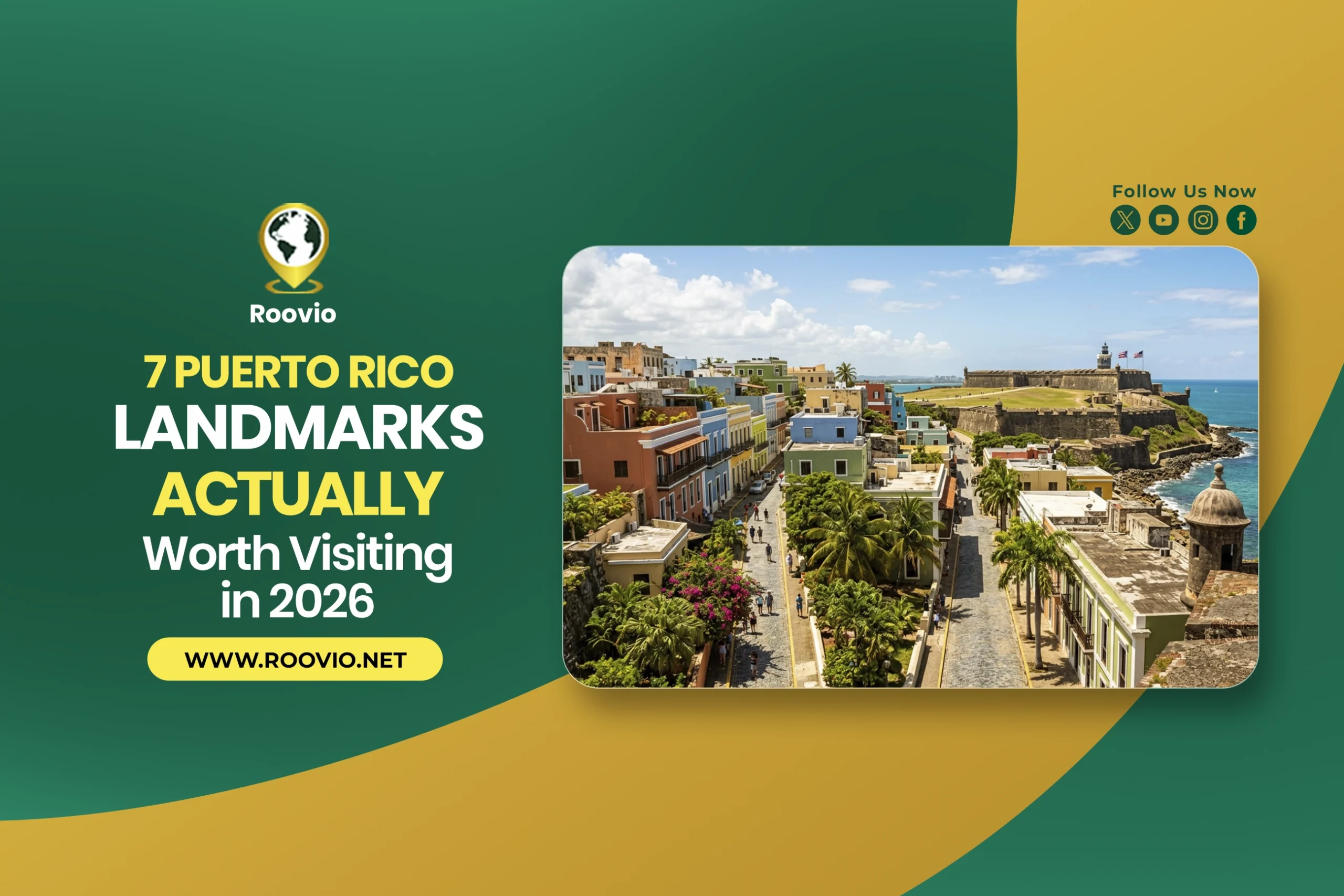
Picture a fortress planted on a headland, six levels of honey-coloured stone with the Atlantic slamming into the rocks below. That's El Morro, and it's the postcard that launched a thousand Puerto Rico trip plans.
The Spanish broke ground in 1539 and kept building until 1787, because San Juan Bay was the front door to their entire Caribbean empire, and they weren't about to leave it unlocked. For four straight centuries, this fort guarded the harbor. Today it's a UNESCO World Heritage Site, and walking in, you understand why immediately.
Inside, El Morro feels less like a fort and more like a maze you somehow get to wander through. Ramps lead into tunnels, tunnels open onto chambers, and some of the walls are a staggering 18 feet thick.
Tickets cost about $10 for adults and include Castillo San Cristóbal, so the two forts make an easy pairing. Start at El Morro, take some time around the enormous green lawn, then walk over to San Cristóbal. Early morning keeps the heat and crowds manageable, while late afternoon brings beautiful light across the old stone. Just expect to share that golden hour with plenty of other visitors.
2. Castillo San Cristóbal
San Cristóbal belongs to the same star-fort tradition as Naarden in the Netherlands and Fort Bourtange. Inside, it is a maze of tunnels, ramps, battlements, and cisterns. You will even find old powder magazines and a dungeon where someone scratched ship drawings into the plaster.
Unlike El Morro, San Cristóbal was built to protect the land approach, the direction an invading army would actually come marching from. That explains its enormous footprint: 27 acres divided into five defensive units, all stitched together by tunnels and moats. It is the largest Spanish fortification ever built in the Americas.
And those 27 acres are exactly why flimsy sandals are a bad idea. Broken-in, cushioned walking shoes belong near the top of your Puerto Rico packing list. Before leaving, ask a ranger about the tunnel talks too. They are free with entry and easily become one of the most memorable parts of the visit.
3. Old San Juan Itself:Cathedral, La Fortaleza, Calle Fortaleza, La Perla
Old San Juan is the kind of place where the landmark isn't one building. It is the whole neighborhood. Turn a corner, and there's a centuries-old cathedral. Keep walking, and you hit a governor's mansion, blue-grey cobblestones, brightly painted façades, and streets that seem to have been designed for getting pleasantly lost.
Founded in 1521, it holds the title of the oldest European-founded city in US territory and the second oldest in the Americas after Santo Domingo. On a slow wander, you'll pass Juan Ponce de León's tomb inside the Cathedral. Nearby sits La Fortaleza, the blue governor's mansion. It is still the oldest executive residence in continuous use in the Western Hemisphere.
Then there are the details that make wandering here so much fun. The adoquines, those blue-grey cobblestones laid centuries ago, are still underfoot. Calle Fortaleza gets its famous umbrella canopy, and La Perla tumbles down the cliffside below the old city walls toward the water.
Stay inside the walls, and this entire district becomes your front garden, which is the strongest argument in the boutique hotel vs resort in Puerto Rico debate. Boutique means you step out the door and you're already there. If you'd rather have the pool, the buffet, and the swim-up bar handled for you, all-inclusive resorts in Puerto Rico do that job beautifully; just plan a proper day trip into the old city.
It is also hillier, hotter, and more cobblestoned than the word “walking” makes it sound. For the far ends of the city, keep roughly $30 aside for taxis and save your legs for the forts. If you're trying to squeeze more into the day, the Roovio app helps you check what other travelers are doing. You can see how much time they spend at each stop and how they fit everything together.
4. El Yunque National Forest
El Yunque has been protected since the Spanish colonial period. It dates back to the Spanish Crown in the 1870s and is one of the oldest protected forest reserves in the Western Hemisphere. Now it's one of Puerto Rico's signature landmarks. Forest types stack up by elevation, ending in twisted, moss-hung dwarf cloud forest at the top.
La Coca Falls is right off the road. Yokahú Observation Tower brings the views. Trails run from paved and easy, like Angelito and Big Tree, to genuinely steep, like Mt. Britton Tower, Los Picachos, and El Toro. At dusk, the coquí frogs start calling. The endangered Puerto Rican parrot lives here too.
If you want fewer visitors around, consider arriving before 8 a.m., when the forest is generally quieter. Bus and guided tours can bring larger groups to the more accessible stops, so if you prefer a slower experience, visiting independently may give you more flexibility. Mt. Britton is also a good option if you want to get farther from the busiest roadside stops.
Want quieter? Try Toro Negro, Río Abajo, or Maricao State Forest. Charco El Hippie is another nearby option. One warning: stay out of the rivers when heavy rain hits.
5. Faro Los Morrillos: Cabo Rojo Lighthouse
The color comes from microorganisms and brine shrimp concentrated in the salt flats at Las Salinas, where salt has been harvested for centuries. It looks like someone spilled rosé across the landscape.
The lighthouse dates to 1882, built to guide ships through the notoriously rough Mona Passage. It was automated in 1967, and the old keeper's quarters have been waiting for a new purpose ever since.
The road in gets muddy and rough, so park early and hike. The gate closes around 5 p.m., which makes sunset tricky. Since you're already out west, keep going north to Crash Boat Beach in Aguadilla for painted fishing boats, the pier, and crystal-clear water.
6. Ponce's historic core — Parque de Bombas and Plaza Las Delicias
Want colonial charm without Old San Juan's cruise-day crush? Go to Ponce. Travelers on Roovio itineraries and other platforms call it La Perla del Sur, the Pearl of the South. Parque de Bombas, the unmistakable red-and-black striped building in Plaza Las Delicias, opened in 1882 as a fair pavilion before becoming Puerto Rico's first fire station. Today it's a museum packed with old firefighting equipment, records, and photographs. Just behind it stands the Cathedral of Our Lady of Guadalupe, with roots stretching back more than 300 years.
But the museum isn't really the experience. The plaza is. Grab a café con leche, watch the lion fountain and arcaded streets come alive, and let the city move around you without rushing anywhere.
Nearby, you've got Museo de la Historia de Ponce, Casa Wiechers-Villaronga, Castillo Serrallés, the Japanese Garden, and Tibes Indigenous Ceremonial Park. If time allows, pair Ponce with Caja de Muertos for hiking and snorkeling. And take the walking tour. Visitors consistently say it's what makes Ponce finally click.
7. Mosquito Bay, Vieques (and Puerto Rico's other bio bays)
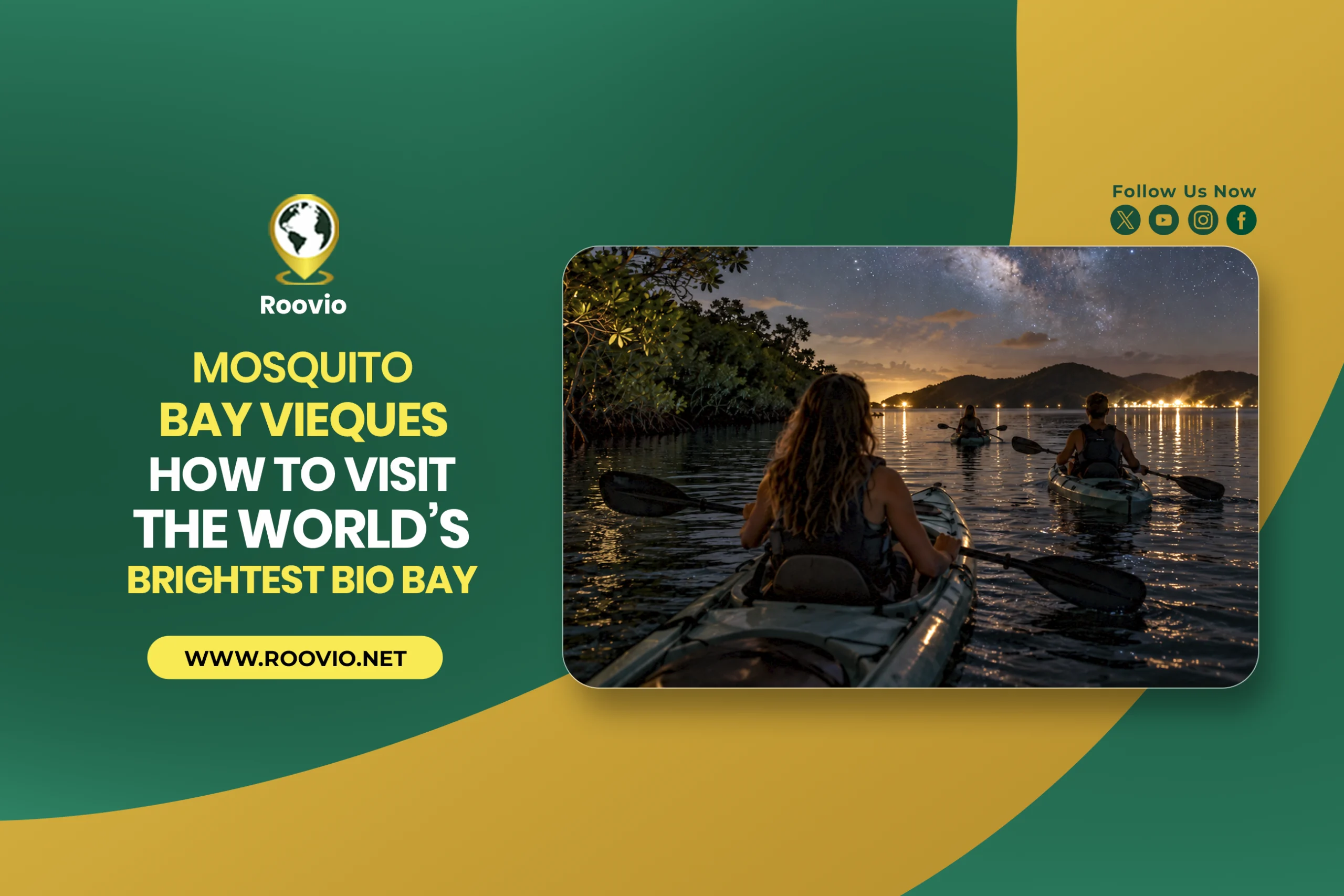
At night, Mosquito Bay looks less like water and more like someone spilled stars across it. The glow comes from tiny bioluminescent dinoflagellates, and Guinness recognizes it as the brightest bioluminescent bay in the world.
The bay's strange advantage is its isolation. Mangroves help keep the water calm and nutrient-rich, while Vieques spent decades under U.S. Navy control, including use as a bombing range until 2003. That history helped keep development and light pollution away from the bay.
You can't simply turn up and swim. You access Mosquito Bay by guided kayak tours, and swimming is prohibited because sunscreen, insect repellent, and other contaminants can damage the delicate ecosystem. Tours usually cost around $57 to $112, depending on the operator.
The bigger catch is timing. Tours run after dark, while the ferry from Ceiba stops in the evening, so plan to stay overnight on Vieques. Moonlight matters too, and the brightest experience comes on darker nights. Book ahead, especially around popular travel dates.
Advice From the Visitors
The most repeated piece of advice across traveler forums is “rent a car”. Nearly every local says the island only truly opens up once you leave the metro area. Even so, plenty of them cheerfully admit the driving gets pretty aggressive out there.
The single most-repeated "authentic" recommendation on the whole board is Sunday afternoon chinchorreo along the Pork Highway in Guavate. You hop from roadside spot to roadside spot eating slow-roasted pork, but carry cash for the kiosks since plenty do not take cards.
US citizens don't need a passport, but you do need REAL ID-compliant identification to fly. One commenter argues that all the anxiety about "tourist traps" is misplaced. If you're on the island eating, driving, and talking to people, you're already having the real experience. The Puerto Rico landmarks aren't a checklist to be conquered; they're just the excuse that gets you out onto the island.
FAQs
What are the most famous landmarks in Puerto Rico?
Castillo San Felipe del Morro and Castillo San Cristóbal sit right in Old San Juan, alongside the historic district itself. Beyond the city, the list features El Yunque National Forest, the Cabo Rojo Lighthouse, Ponce's Parque de Bombas on Plaza Las Delicias, and Mosquito Bay on Vieques. Together, those seven spots cover forts, old town streets, rainforest, coastlines, and a bioluminescent bay.
How much are Castillo San Felipe del Morro tickets?
Adult entry is around $10, and the same ticket also gets you into Castillo San Cristóbal, so plan both forts for the same day.
Which single Puerto Rico landmark should I prioritize if I only have one day?
Old San Juan. You get El Morro, San Cristóbal, the Cathedral, La Fortaleza, the cobblestone streets, and dinner all inside a walkable few blocks.
Do I need a car to see Puerto Rico's famous landmarks?
Not for Old San Juan. For everything else, yes. El Yunque, Cabo Rojo, and Ponce are all far easier with your own wheels.
Can I swim in the bioluminescent bay?
Not in Mosquito Bay on Vieques, swimming there is illegal because sunscreen and insect repellent damage the ecosystem. La Parguera does allow swimming.
When is the best time to visit?
September and October give you the lowest crowds and the best prices, with hurricane season as the trade-off. Whenever you go, reach the forts and El Yunque before 10 am.
Are the landmarks suitable for children?
The forts are made for exploring, El Yunque's paved lower trails are short and easy, and the Yokahú tower is a quick win. The steeper hikes and the kayak-only bio bay tour are better suited to older kids.
Conclusion
The beaches will get you to Puerto Rico. The Puerto Rico landmarks are what make you feel like you actually went somewhere.
You can stand in a sentry box where a soldier once watched for enemy sails. Walk down a street filled with centuries of history, climb through a cloud forest, and finish the week paddling through water that glows at night. In Vieques, the Navy's presence restricted development and access to parts of the island for decades, helping preserve areas that remained relatively undeveloped.
Pick three or four, build a loose route, rent the car, carry cash, wear the good shoes, and let the island fill in the rest.