
December to April is widely regarded as the best time to visit Puerto Rico. During this season, the thermometer hovers in a dreamy 70°F to 83°F range, serving up endless sunny skies, lower humidity, and minimal rainfall. It is the absolute perfect time for exploring historic Old San Juan, hitting the iconic sands of Flamenco Beach, or catching prime winter surfing swells in Rincón.
However, the right time to visit ultimately depends on your travel priorities. If you're looking for lower hotel rates and fewer crowds, the late summer and early fall months can offer better value, though they also coincide with the Atlantic hurricane season.
To help you balance the weather risks, costs, and crowds, here is our complete breakdown of what to expect during every month of the year.
Quick Answer: Best Time to Visit Puerto Rico for Different Needs
The best time to visit Puerto Rico depends on what you want from your trip. Whether you're planning a beach vacation, looking for lower hotel prices, or hoping to experience local festivals, here's a quick guide to the best travel windows.
- January to March: Best for winter sun and whale watching. Pristine, dry weather conditions make this one of the best times to visit Puerto Rico for escaping winter weather, while it also marks the prime migration window to spot humpback whales.
- February to April: Best for spring breakers and clear beach days. Humidity drops to its annual low during this period, creating excellent beach conditions and maximum water visibility in Culebra and Vieques.
- March to May: Best transition window for large groups. This is a great time to balance warm weather with cheaper villa rentals before the heavier summer rains arrive.
- April to June: Best for nature lovers. These months are ideal for hiking in the lush El Yunque National Forest with fewer trail crowds and witnessing sea turtle nesting season.
- May to June: Best value sweet spot. Winter crowds begin to disappear, resort prices drop significantly, and the ocean remains beautifully warm for early summer family vacations.
- July to November: Best for extreme budget and smaller crowds. Accommodation rates often hit their lowest levels during this period, but this window overlaps with the Atlantic hurricane season, so travelers should plan with flexibility.
- November to February: Best for culture and festivals. This is one of the best times to visit Puerto Rico for experiencing the island's famous holiday celebrations, including the 45-day Christmas season and Fiestas de la Calle San Sebastián.
- December to April: Best overall weather. Expect comfortable 70°F to 83°F days and mostly clear skies, but keep in mind that this is peak season, bringing the highest hotel prices and largest crowds.
Puerto Rico Seasons at a Glance
Based on authentic reviews from real travelers who have explored the island, here is a quick snapshot of the best times of year to visit Puerto Rico:
| Season | Months | Avg Temps | Rainfall | Crowds | Hotel Prices | Best For |
|---|---|---|---|---|---|---|
| Winter | Dec-Apr | 70-83°F | Lowest | High | Highest | Beaches, sightseeing, first-time visitors |
| Spring | Apr-Jun | 72-86°F | Moderate | Medium | Moderate | Families, nature, snorkeling |
| Summer | Jul-Aug | 76-89°F | Moderate-High | Lower | Lower | Budget travelers, water sports |
| Fall | Sep-Nov | 75-88°F | Highest | Lowest | Lowest | Deals, local atmosphere |
The best time to visit Puerto Rico helps you pick the right season, but your itinerary decides how you experience the island. Roovio brings together real day-by-day plans from travelers who have already been there. Use their routes as a starting point, adjust the stops you like, and create a Puerto Rico trip that feels personal without spending hours planning everything from scratch.
Best Time to Visit Puerto Rico Based on Your Travel Style
Every traveler shows up to Puerto Rico chasing something different. Some people just want flawless beach weather and a cocktail in hand. Others are hunting for a deal, dodging crowds, or trying to time a trip around a festival that locals have been talking about for months.
There's no single "right" answer here, so we broke it down by travel style. Find the one that sounds like you, and plan around it.
Best for Good Weather
- Best months: December to April.
- Average temperature: 70 to 83°F.
- Crowds: high.
- Prices: highest of the year.
If you're the type who wants a trip with zero gambling involved, no rain delays, no "let's see how the sky looks," December through April is where you stop worrying. This is Puerto Rico's dry season, and the island leans into it fully: temperatures stay pleasant, humidity drops, and the conditions are ideal for hiking, sightseeing, and full beach days without interruption.
Old San Juan's cobblestones stay dry, El Yunque's trails stay clear, and a sunset boat trip you booked three weeks ago will almost certainly happen as planned. The tradeoff is obvious the moment you try to book a hotel room in February: everyone else worked out this secret decades ago, so you're sharing the sunshine with the biggest crowds and the highest prices of the year.
- Pros: reliable sunshine, lowest humidity of the year, calm seas, and every attraction fully open.
- Cons: highest hotel rates, biggest crowds, and advance booking is essential.
Best for Beaches
- Best months: December to June.
- Water temperature: upper 70s to low 80s°F.
- Crowds: high from December to April, medium in May and June.
- Prices: high, easing by May.
If your idea of a vacation is finding one perfect stretch of sand and not moving from it, you want the stretch from December through June, when the water is at its calmest and clearest. Water temperatures sit comfortably in the high 70s from around January through April, warming gradually as summer gets closer, and the wind stays light enough that the sea looks more like glass than ocean.
Flamenco Beach, Playa Sucia, and Luquillo all hit their best form during this stretch, with gentle, current-free entry points that make swimming easy rather than something you have to time around the tide. May brings a short burst of extra rain, but it tends to pass through fast enough that it barely dents an afternoon.
- Pros: calm, glassy water, warm temperatures, and minimal wind.
- Cons: crowded beaches in peak months, and parking fills up early.
Best for Lower Prices
- Best months: July to November.
- Crowds: low.
- Prices: lowest of the year.
If you're more interested in stretching a dollar than chasing a perfect forecast, July through November is when Puerto Rico quietly gets cheap. This is hurricane season, officially running June 1 through November 30, and that single fact does more to crash hotel rates than anything else on the calendar. Fall lodging can sometimes be found for under $200 a night, and the risk of storms is exactly what drives both visitor numbers and prices down so sharply.
October is usually the smartest pick inside this window, since the worst of the season's storm activity has typically passed, but the discounted rates haven't caught up yet. Just travel with a refundable rate and a real eye on NOAA's forecasts, because the savings only make sense if you're not also gambling your whole trip.
- Pros: lowest hotel and flight prices, thinner crowds, and easier reservations.
- Cons: real hurricane risk, higher humidity, and more rain disruption.
Best for Smaller Crowds
- Best months: September to October.
- Crowds: lowest of the year.
- Prices: low.
Old San Juan's streets, normally packed shoulder to shoulder, go quiet enough that you can hear your own footsteps on the cobblestones. The ferries to Culebra and Vieques, usually crowded during peak winter months, often run with plenty of empty seats. The tradeoff is the ocean itself: stronger swells during storm season can lead to ferry cancellations or rescheduled departures, so this quieter side of Puerto Rico comes with a little extra uncertainty.
Flamenco Beach, one of the most photographed beaches in the Caribbean, can feel like a private cove you stumbled onto by accident. It's the same storm season that clears everyone out, so the silence and the risk are really two sides of the same coin. Plan around the forecast, and you get a version of the island most visitors never see.
- Pros: genuine solitude, easy ferry access, and no reservation lines.
- Cons: overlaps with active hurricane season, and more rain.
Best for Families
- Best months: April to June.
- Average temperature: 72 to 86°F.
- Crowds: medium.
- Prices: moderate.
This window threads a nice needle for families: spring break season is winding down, but the weather hasn't turned wet yet. Kids get calm, warm water for swimming and a well-maintained, accessible trail system at El Yunque National Forest.
It's also sea turtle nesting season on the outer islands, a genuinely memorable thing for kids to watch. The bigger draw for parents, though, is the safety margin: dry-season conditions are still mostly in effect, so rip currents and storm risk stay low.
- Pros: manageable crowds, safer swimming conditions, and kid-friendly hikes and snorkeling.
- Cons: some afternoon showers possible, and prices higher than the true low season.
Best for Couples & Honeymoon
- Best months: May and November.
- Crowds: low.
- Prices: below peak.
For couples looking for the best time to visit Puerto Rico for a honeymoon, May and November offer the perfect balance of fewer crowds, better rates, and a more relaxed island atmosphere. This window sits in that narrow gap just outside the two big crowd surges, the winter holidays and spring break, and that gap is exactly why hotel rates drop enough to make an oceanfront upgrade feel realistic instead of indulgent.
Rincón's sunsets hit differently when the beach isn't full, and a private bioluminescent bay tour in Vieques feels built for two rather than a tour group. May is the cleaner choice for zero weather anxiety, since it falls entirely outside hurricane season. November is usually calm too, but it's technically still inside the window, so it carries a small asterisk.
- Pros: lower rates on upscale rooms, quieter beaches and restaurants, and romantic timing.
- Cons: November still falls within hurricane season.
Best for Surfing
- Best months: November to March.
- Wave size: moderate to large on the northwest coast.
- Skill level: best for intermediate to advanced surfers.
A swell forecast matters more than a beach chair for this crowd, and November through March is when Rincón actually earns its reputation. North Atlantic winter storms send long, powerful swells down toward the island's west and northwest coasts during this stretch, lighting up breaks like Domes, Maria's Beach, and the legendary Tres Palmas.
January is generally considered the month with the cleanest, most consistent waves. Tres Palmas itself isn't a beginner's wave; it's a serious reef break that belongs to experienced surfers only, but the same coastline has gentler options for everyone else, and the east and south coasts stay calm enough year-round for newer surfers who'd rather not learn on a reef.
- Pros: consistent swells, warm water, and no wetsuit needed.
- Cons: the best breaks suit experienced surfers, and lineups get crowded in peak months.
Best for Snorkeling & Diving
- Best months: year-round, with a slight edge to summer and fall.
- Visibility: best from May to August and September to November.
- Best beaches: Flamenco, Carlos Rosario, and Blue Beach in Vieques.
This is the rare category where the calendar barely matters, which is good news for anyone who's booked a trip and then quietly worried, "but will the water actually be clear?"
Water temperatures hold steady between 78 and 82°F all year, so there's no real off-season to dodge. Visibility tends to peak from May through August and again from September through November, when the seas are calmest, though even winter's slightly choppier water rarely ruins a trip. Culebra and Vieques are the standouts no matter the month, both ringed by protected, current-free bays that keep the water clear even when the mainland coast gets a little stirred up.
- Pros: warm water all year, excellent visibility most months, and beginner-friendly shore access.
- Cons: winter swells can stir up sediment near exposed reefs.
Best for Festivals & Local Culture
- Best months: December to February.
- Crowds: high.
- Prices: high.
The shoreline gets all the attention, but Puerto Rico's real personality shows up between December and February, when the island stops performing for tourists and just celebrates for itself. The holiday season here is one of the longest in the world, running from Thanksgiving all the way through mid-January, and it builds toward the Fiestas de la Calle San Sebastián, a multi-day street festival that takes over Old San Juan with live music, parades, and dancing spilling out of every plaza in the historic district.
It's usually held during the third weekend of January, though it's worth checking the official schedule before booking, since exact dates shift slightly year to year. February doesn't let the energy fade either, with Ponce's Carnival and the Casals classical music festival both landing that month.
- Pros: the biggest festivals of the year, an authentic local atmosphere, and mild weather.
- Cons: the highest prices and crowds of the year, so book lodging far in advance.
Puerto Rico Weather by Season
Usually, the weather in Puerto Rico is warm and sunny with temperatures around 70°F to 80°F. But in some seasons, like from May to August, you can face very hot temperatures. Here is the breakdown of Puerto Rico's weather by season so you can easily decide when to go!
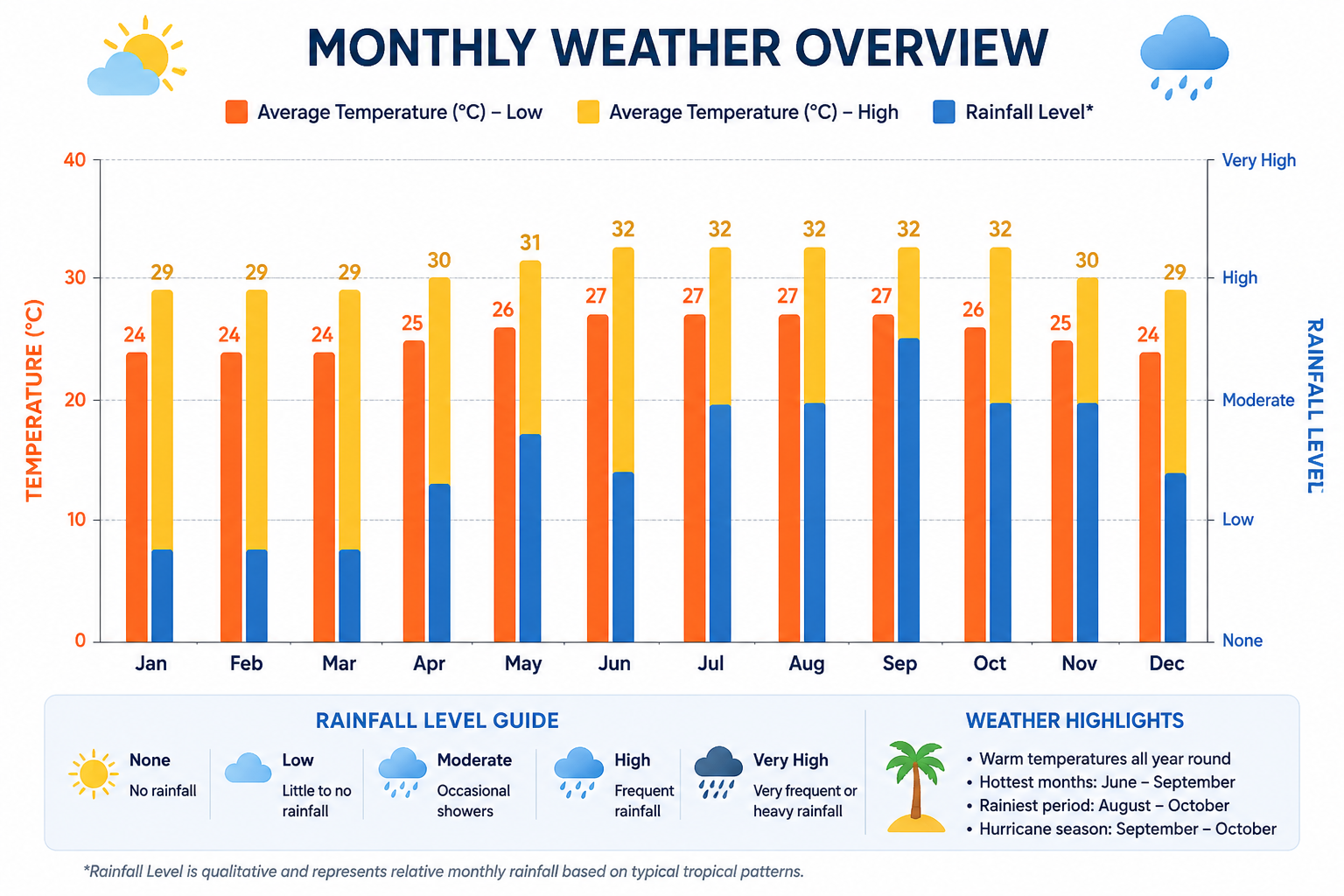
If you are planning to spend your time lounging on the beach, the best time to visit Puerto Rico is during January. The month brings warm sunshine, comfortable temperatures, and excellent beach conditions, making it ideal for travelers who want to escape freezing winter temperatures and enjoy a relaxing Caribbean getaway.
You can also look at what people suggest about Puerto Rico on Roovio. Over there, real travelers share their personal itineraries and honest reviews about Puerto Rico, so you can get a much better idea of what month to pick, what hotel destination to choose, and what costs you can arrange for your next visit!
Average Costs Throughout the Year
The time of year you visit Puerto Rico can make a noticeable difference to your travel budget. Hotel rates, airfare, and even rental cars change throughout the year, with winter being the most expensive and fall usually offering the biggest savings.
Here is a realistic estimate of what you can expect to spend during each season.
| Season | Hotel (Per Night) | Flights (Round-Trip) | Car Rental (Per Day) | Overall Budget (Per Day) |
|---|---|---|---|---|
| Winter (Peak Season) | $250–$500 | $300–$600+ | $50–$80 | $300–$600+ (High) |
| Spring (Shoulder Season) | $100–$220 | $220–$400 | $35–$55 | $150–$300 (Moderate) |
| Summer (Mid-Low Season) | $80–$160 | $180–$350 | $30–$50 | $120–$220 (Economical) |
| Fall (Low Season) | $60–$130 | $150–$300 | $25–$40 | $95–$180 (Rock-Bottom) |
Annual Events & Festivals Calendar
Puerto Rico is famous for throwing some of the absolute longest, most energetic holiday celebrations on the entire planet. If you want to time your runway touchdown perfectly with massive street parades, authentic music, or world-class food, matching your trip to the island's annual festival rhythm is a total game-changer.
San Sebastián Street Festival (Fiestas de la Calle San Sebastián)
- Month: January.
This is the unofficial, explosive grand finale of the island's epic Christmas season. The historic streets of Old San Juan transform into a massive open-air party packed with live salsa bands, traditional Bomba y Plena drumming, local artisan markets, and the iconic Cabezudos (folkloric giant-puppet street parades).
Ponce Carnival (Carnaval Ponceño)
- Month: February.
Experience one of the oldest and most colorful carnivals in the Western Hemisphere, running right through the heart of Ponce. It is the absolute best time to witness the legendary Vejigantes, vibrant local performers dancing in elaborate, multi-horned papier-mâché masks and rainbow costumes to ward off evil spirits before Lent.
Saborea Puerto Rico
- Month: April.
This is the ultimate beachfront culinary paradise for food lovers looking to taste the finest flavors in the Caribbean. Top local and international chefs gather in the San Juan area to serve up a multi-day feast of authentic Puerto Rican street food, high-end culinary workshops, and endless pours of world-class island rum.
Noche de San Juan
- Month: June.
Witness an incredible, island-wide beach tradition that happens every single year on the night of June 23rd. Locals and travelers alike gather on coastal shores like Condado Beach or Flamenco Beach, and exactly at midnight, everyone walks backward into the ocean water three times to wash away bad luck and invite good fortune for the upcoming year.
Final Verdict: When Is the Best Time to Visit Puerto Rico?
Puerto Rico has some really beautiful scenery, hotels, tastes, and above all, a deep tradition that is absolutely worth experiencing in life. But enjoying all of this at a reasonable cost comes down to knowing exactly when is the best time to visit Puerto Rico.
Above, we listed all the seasons and their costs, including what each season carries and what its pros and cons are. So pick your favorite vibe and book your next destination getaway to Puerto Rico!
Frequently Asked Questions
Is Puerto Rico worth visiting in September?
It is worth it if you are on a tight budget, but it is a gamble. September is the absolute peak of the Atlantic hurricane season, meaning you will face high humidity, heavy rain, and potential storm disruptions. On the bright side, hotel prices and flight rates hit rock bottom.
Is December too crowded in Puerto Rico?
Yes, December is one of the busiest months of the year. Tourists flock to the island to escape the freezing winter weather up north, and local holiday celebrations are in full swing. Expect packed beaches, long lines at attractions, and peak-season pricing.
What is the rainiest month in Puerto Rico?
August and November traditionally battle for the title of rainiest month. August brings heavy tropical afternoon downpours during peak storm season, while November experiences frequent, lingering tropical showers as the seasons transition.
Can you swim year-round in Puerto Rico?
Absolutely. Ocean temperatures in Puerto Rico stay incredibly warm all year, usually hovering between a comfortable 79°F and 84°F. Just keep an eye on local surf warnings, especially on the north coast during winter when swells get massive.
Is Puerto Rico safe during hurricane season?
Puerto Rico is generally safe during hurricane season, but flexibility is important when choosing the best time to visit Puerto Rico. Hotels and resorts are well prepared for tropical storms, though weather can still affect flights, ferries, and outdoor activities. If you plan a trip between June and November, keep an eye on forecasts, choose flexible bookings, and have backup plans for weather changes.